
Search
Search
Close
Exhibition
Check category
/
/
Quickly understand the release of MG black label

Quickly understand the release of MG black label

  • Categories:News
  • Time of issue:2022-10-07 16:46
  • Views:

Quickly understand the release of MG black label

On August 17, the MG Black Label was officially unveiled, including two things: one is the release of the MG Black Label; the other is the release of the first model of the MG Black Label, MG7 (parameters | inquiry).

Several Problems of MG Black Label Release

① What is MG Black Label?

It can be understood as a sub-sequence of high-end models of MG. Product performance is stronger, product quality is better, product price is more...

② What is the meaning of the MG black label?

The MG brand must break through the existing ceiling - product upgrade, and differentiation from the existing silver label - continue to be younger and more high-end. Try to get rid of the cost constraints, and be more extreme in terms of performance, design, texture, etc.

③ What is the difference in the service system of MG Black Label?

Dedicated sales channels: Select the stores whose image, team, service, and concept have reached the standard from MG's current channels, and give special authorization. It is estimated that by September, 227 dealers will obtain the black label authorization;

Exclusive service: There will be exclusive black-label experience consultants to provide exclusive services for customers;

Exclusive benefits: The exact content is uncertain, but there will be.

Summary: MG sub-series products have more beautiful designs, more extreme performance, more luxurious configurations, better service, and higher prices.

A preview of the MG7 (released, unreleased)

① Positioning of MG7?
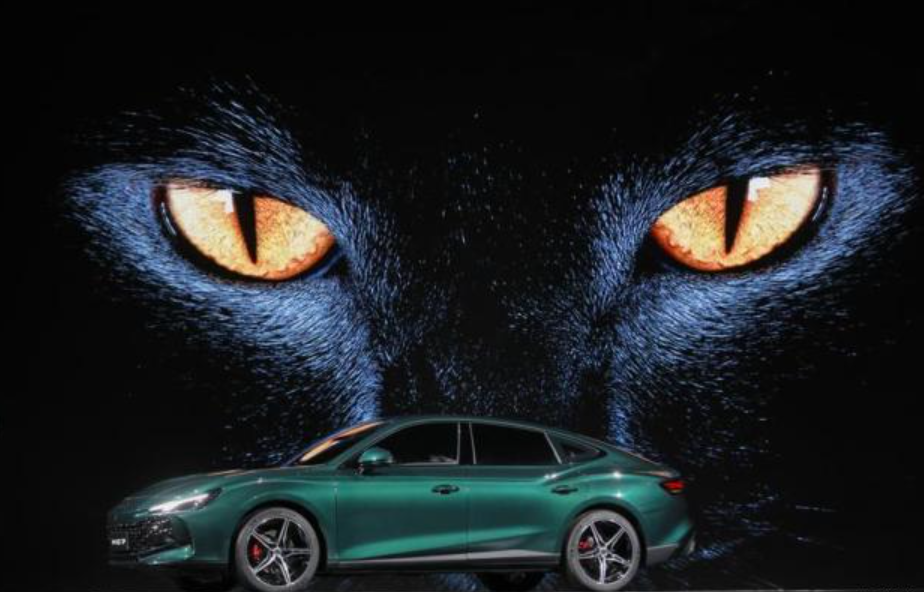
The mid-size sports coupe is roughly the same target group as the former Mazda 6, Sibo Rui, the current Regal GS, FAW-Volkswagen CC, and other models that are positioned for sports.

② Several highlights of the MG7 exterior design:

Emerald body color - whether the niche green can lead the trend;

The nose shape of the swooping down - carries the movement to the end;

The fastback shape that goes straight to the rear of the car - sacrificing space in the back row and luggage compartment, MG is bold this time;

The source of inspiration refers to the hunting pupil headlights of the cheetah eyes - a very cool headlight shape;

Three-stage active electric rear wing - a configuration that makes people's blood vessels can only be enjoyed on Porsche.

To sum up, the overall design of MG7 is wide open and closed. In order to carry out the exercise to the end, there is not much preference for common needs such as home and space. It must have a high rate of return on the road, but the consumer group is definitely It is a niche, reflecting MG's uncompromising definition of this product.

③ Several highlights of the MG7 interior cockpit:

33-inch integrated ultra-wide floating screen;

The X-Mode racing mode has built-in real data and lap rankings of many famous tracks;

Special-shaped start button, handle, and cup holder;

The one-piece racing seat is made of Dinamica and Silk Nappa leather, the former only used in supercars such as Ferrari.

④ Several highlights of MG7 power:

The peak power of the 2.0T engine reaches 192kW, the peak torque is 405N m, and the acceleration time from 0 to 100km/h is 6.5s. The acceleration performance exceeds that of FAW-Volkswagen CC, Regal GS, and Audi A7;

Equipped with a 9AT transmission, currently, only some high-end models such as Mercedes-Benz and GM have transmissions with 9 or more speeds.

Our company includes a variety of a MG models parts.

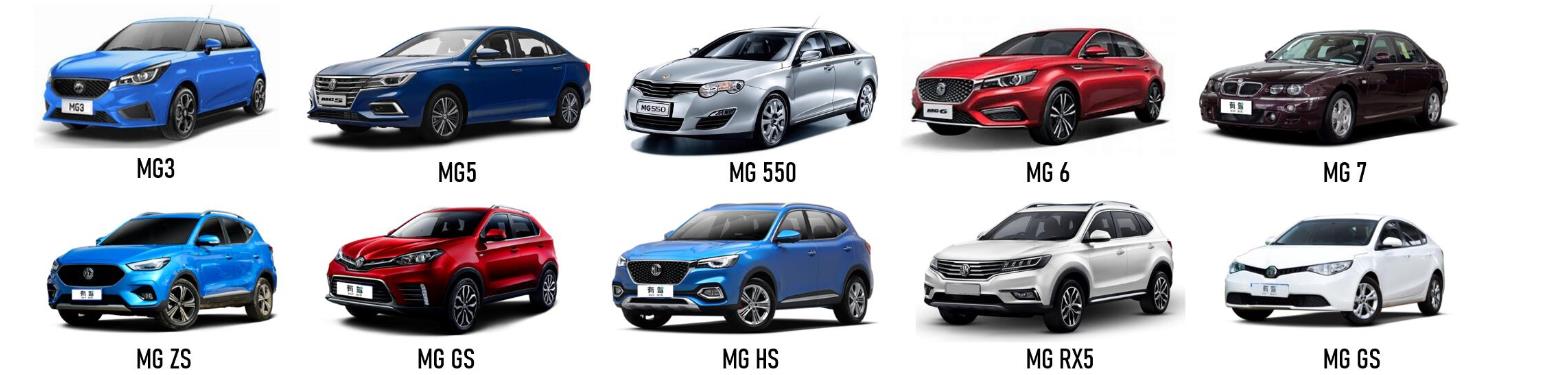
SUV: MG ONE/EZS/ZS/HS/GS/

Cyberster:RX3/RX5/RX8

Sedan:MG3/MG3SW/MG5/MG6/MG6EV/MG7/MG

GT;MG350/360/550/e550/750/950

MPV:iMAX8
MotorTec Auto Parts is a MG parts supplier in China. We are committed to providing customers one-stop parts solution on MAXUS parts.

You are welcome to contact us at john@motortec.com.cn or find our CONTACTS page!

https://www.motortec.com.cn/Contact_us.html

Keyword:

How a Car Cooling System Works: Simple Explanation 2025-12-26 19:23:33
Gasoline engines waste a lot of energy. Only about 30% of the fuel's power actually pushes the car along. The other 70% ends up as heat. If you let that heat build up, it'll wreck the engine bad. That's why the cooling system is there. It pulls out the extra heat and lets it escape into the air. Keeps everything running at safe temps. It doesn't just cool things down, though. The system also gets the engine up to its ideal temperature quick. That saves gas. Cuts pollution. And makes the car feel smoother. Best temp is roughly 200°F (93°C). Fuel burns better there. Less gunk comes out the exhaust. Oil flows easier, so less friction. Parts last longer too. Cars mainly use two kinds of cooling: liquid or air. Pretty much all new ones are liquid-cooled. It's just better at the job and easier to manage. Types of Cooling Systems Liquid Cooling In liquid cooling, a fluid called coolant runs through channels in the engine block and head. It grabs heat from the hot parts. Then hauls it over to the radiator. At the radiator, the heat jumps into the air. Wind from driving or fans speeds it up. Air Cooling Air cooling isn't common now. Some bikes or older cars still use it. The engine's got fins on it, made of aluminum. They suck heat out of the cylinders and such. A fan blasts air across those fins to carry the heat off. Cooling System Overview The whole thing in a liquid system is about moving coolant to the hot spots. Engine running? Water pump shoves coolant around the cylinders and up into the head. Hits places like the combustion chambers and exhaust valves hard. Thermostat calls the shots on routing. Cold start? It loops coolant right back to the engine, skipping the radiator. Warms up faster that way. Hits 180-195°F (82-91°C)? Thermostat pops open. Coolant goes to the radiator to dump heat. Lots of cars have side loops. One pipes hot coolant to the heater core for cabin warmth. Automatics often have another to cool the trans fluid, using a little exchanger in the radiator. Coolant Coolant has to handle cold and hot without freezing or boiling easy. And move heat good. Water's awesome at heat transfer. But freezes at 32°F (0°C), boils at 212°F (100°C). Not great solo. These days, it's usually 50/50 water and ethylene glycol—antifreeze. Drops freezing to around -35°F (-37°C). With pressure, boiling goes past 265°F (129°C). System holds 14-15 psi, like a pressure cooker, bumping it higher. Extra stuff in coolant fights rust and gunk. Helps everything stay clean and working longer. Water Pump Water pump's a spinner type, centrifugal. Belt from the crank turns it. Pulls cool stuff from the radiator. Pushes it into engine channels. Runs full time with the engine. Keeps flow steady for temp control. Engine Block and Cylinder Head Block and head got hollow spots inside for coolant. Placed right by the real hot zones—cylinder walls, exhaust valves. Can get to 4,500°F (2,500°C) there. Good circulation stops overheating pockets. No knocking or seizing. Radiator Radiator's the heat swapper. Hot coolant rolls in through skinny aluminum tubes. Fins all over boost the area. Air whooshing by—driving or fan—grabs the heat. Modern ones are aluminum, tiny tubes, tons of fins. Quick cooling. Many got a spot for trans fluid too. All in one unit. Radiator Cap Tiny cap, big job. Seals to build pressure. Higher pressure, higher boil point. Too much pressure—say 14-15 psi—it vents extra to the overflow. Cools off? Pressure drops, vacuum sucks coolant back in. Keeps it full, no air bubbles messing flow or making hot spots. Thermostat Thermostat speeds warm-up. Then holds steady temp. Cold? Closed, just engine loop. Heats to 180-195°F (82-91°C)? Wax melts, opens valve. To the radiator. No overcooling on start. Safe once hot. Cooling Fan Fans shove air through radiator extra. Needed when you're stuck in traffic or idling. Front-drive cars mostly electric. Sensor flips 'em on. Rear-drive sometimes belt fans with clutches. Only spin hard when hot. Saves power. Heater System Heater grabs hot coolant for cabin air. Runs through a little radiator—heater core. Blower pushes air over it to vents. Separate loop, so heat comes quick after start. Engine too hot? Blast the heater. Pulls heat out fast. Temp fix till pro car cooling system repair. MotorTec offer a wide range of auto parts, including filters, belts, engine parts, engine mountings, chassis parts, suspension parts, sensors, timing kits, gearbox parts, clutch kits, bearings, ignition parts, steering parts, and braking parts. These components include critical cooling system elements such as radiators, thermostats, water pumps, hoses, and heater cores — all essential for reliable thermal management. If your car's overheating or the cooling seems off, get car cooling system repair soon. Stops worse problems later. FAQ Q: What are common signs of a failing car cooling system? A: Gauge shooting up. Puddles of coolant underneath. Steam under the hood

Contact us 

MotorTec (Nanchang) Auto Parts Ltd.

Address:Building 3, Jiangxi Yimin Industrial Area.No. 898 Jinsha 3rd Road, Xiaolan Economic Development Zone, Nanchang City,Jiangxi Province
Whatsapp/Wechat: 86 189 0700 4062
E-Mail: john@motortec.com.cn

//omo-oss-file.thefastfile.com/100001/new2021073017261834921/cms/file/cabcfac6-8f0e-4959-a119-129b29a9dcc9.png

  Copyright 2021 MotorTec (Nanchang) Auto Parts Ltd. All Rights Reserved  赣ICP备2021008218号      SEO