Search
Search
Close
Exhibition
Check category
/
/
/
Geely Geometry A EV Car

Geely Geometry A EV Car

  • Categories:Industrial
  • Time of issue:2023-05-29 10:05
  • Views:

Geely Geometry A EV Car

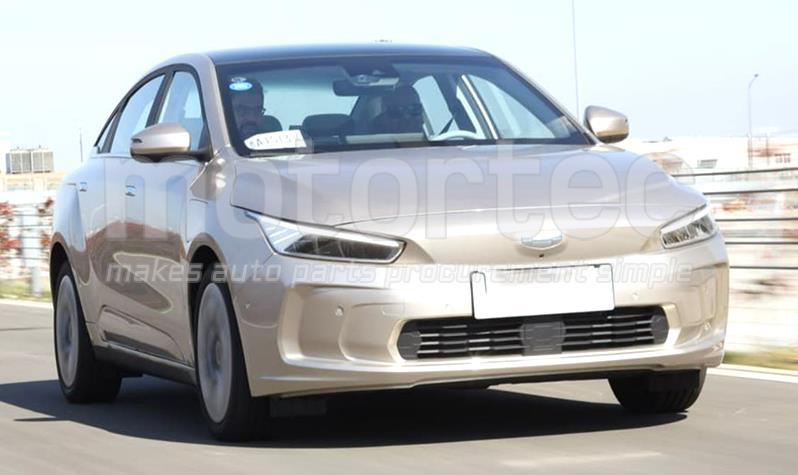
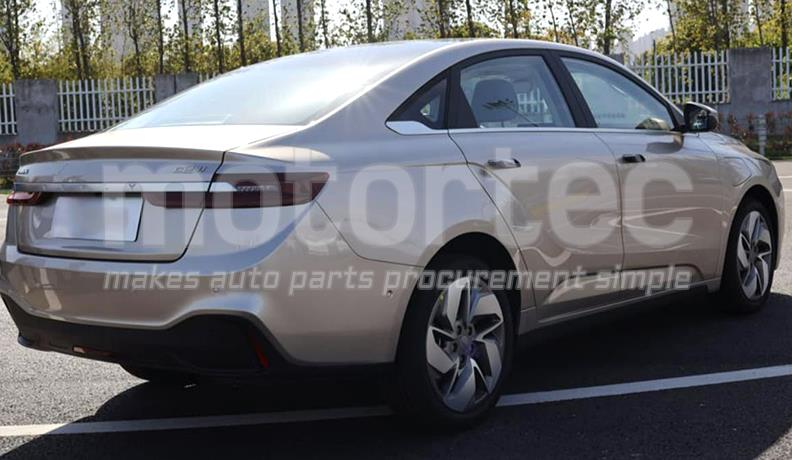
Geely Geometry A Car body dimensions are 4736/1804/1503mm in length, width, and height respectively, with a wheelbase of 2700mm, positioning it as a compact car. The side of the car is paired with hidden door handles, and the rear is styled with a chrome strip connecting the left and right taillights, with a slightly upturned rear wing, giving the rear a more distinctive sense of hierarchy.
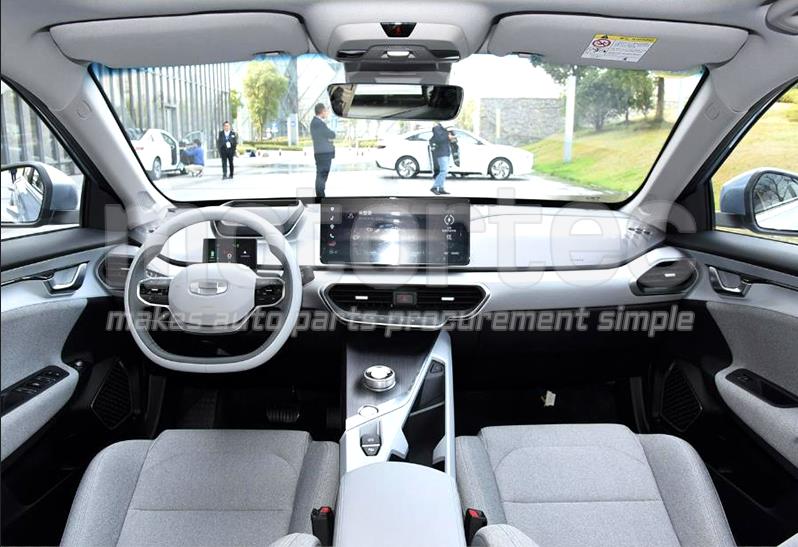
The new car adopts a white color scheme, complemented by silver, to create a futuristic cabin environment. The car eliminates a lot of physical buttons, replaced by a 12.3-inch suspended touch screen on the center console, used to operate the car's controls. The asymmetrical minimalist design under the front air vents and the center channel highlights the entire interior.
In terms of power, the new car will be equipped with a drive motor with a maximum power of 163Ps (120kW) and a maximum torque of 250N-m. The battery pack is divided into 61.9kWh and 51.9kWh capacity battery packs according to the capacity, and its NEDC comprehensive working range is 500km and 410km respectively, while the car will have five charging modes, so users can choose the best charging method according to different environments. The high-dimensional standard range version takes 0.5 hours to charge from 30%-80%, and the high-energy ultra-long range version takes 0.55 hours to charge from 30%-80%. Geely Geometry A has a top speed of 150km/h and accelerates from 0-50km/h in 3.8s.


In addition, Geely Geometry A is equipped with an ITCS battery intelligent temperature control management system, extremely cold preheating, and high-temperature cooling. On the electric drive, Geely Geometry A adopts a HEDS high-efficiency electric drive system, which is equipped with a permanent magnet synchronous motor with a waterproof and dustproof rating of IP67, which can ensure safe operation even when driving in water.
MotorTec Auto Parts is a one-stop auto parts supplier for all GEELY cars, including Panda (LC), MK, GC6, X1, SC3, X3, GX2, GX7, Boyue, Emgrand EC7/EC8, Emgrand GT and etc. 

As a professional GEELY auto spare parts dealer, we could provide our customers good and professional service.

* Good quality auto parts with competitive price

* Professional auto parts packaging

* On-time delivery

Applicable Models

 

Keyword:

How a Car Cooling System Works: Simple Explanation 2025-12-26 19:23:33
Gasoline engines waste a lot of energy. Only about 30% of the fuel's power actually pushes the car along. The other 70% ends up as heat. If you let that heat build up, it'll wreck the engine bad. That's why the cooling system is there. It pulls out the extra heat and lets it escape into the air. Keeps everything running at safe temps. It doesn't just cool things down, though. The system also gets the engine up to its ideal temperature quick. That saves gas. Cuts pollution. And makes the car feel smoother. Best temp is roughly 200°F (93°C). Fuel burns better there. Less gunk comes out the exhaust. Oil flows easier, so less friction. Parts last longer too. Cars mainly use two kinds of cooling: liquid or air. Pretty much all new ones are liquid-cooled. It's just better at the job and easier to manage. Types of Cooling Systems Liquid Cooling In liquid cooling, a fluid called coolant runs through channels in the engine block and head. It grabs heat from the hot parts. Then hauls it over to the radiator. At the radiator, the heat jumps into the air. Wind from driving or fans speeds it up. Air Cooling Air cooling isn't common now. Some bikes or older cars still use it. The engine's got fins on it, made of aluminum. They suck heat out of the cylinders and such. A fan blasts air across those fins to carry the heat off. Cooling System Overview The whole thing in a liquid system is about moving coolant to the hot spots. Engine running? Water pump shoves coolant around the cylinders and up into the head. Hits places like the combustion chambers and exhaust valves hard. Thermostat calls the shots on routing. Cold start? It loops coolant right back to the engine, skipping the radiator. Warms up faster that way. Hits 180-195°F (82-91°C)? Thermostat pops open. Coolant goes to the radiator to dump heat. Lots of cars have side loops. One pipes hot coolant to the heater core for cabin warmth. Automatics often have another to cool the trans fluid, using a little exchanger in the radiator. Coolant Coolant has to handle cold and hot without freezing or boiling easy. And move heat good. Water's awesome at heat transfer. But freezes at 32°F (0°C), boils at 212°F (100°C). Not great solo. These days, it's usually 50/50 water and ethylene glycol—antifreeze. Drops freezing to around -35°F (-37°C). With pressure, boiling goes past 265°F (129°C). System holds 14-15 psi, like a pressure cooker, bumping it higher. Extra stuff in coolant fights rust and gunk. Helps everything stay clean and working longer. Water Pump Water pump's a spinner type, centrifugal. Belt from the crank turns it. Pulls cool stuff from the radiator. Pushes it into engine channels. Runs full time with the engine. Keeps flow steady for temp control. Engine Block and Cylinder Head Block and head got hollow spots inside for coolant. Placed right by the real hot zones—cylinder walls, exhaust valves. Can get to 4,500°F (2,500°C) there. Good circulation stops overheating pockets. No knocking or seizing. Radiator Radiator's the heat swapper. Hot coolant rolls in through skinny aluminum tubes. Fins all over boost the area. Air whooshing by—driving or fan—grabs the heat. Modern ones are aluminum, tiny tubes, tons of fins. Quick cooling. Many got a spot for trans fluid too. All in one unit. Radiator Cap Tiny cap, big job. Seals to build pressure. Higher pressure, higher boil point. Too much pressure—say 14-15 psi—it vents extra to the overflow. Cools off? Pressure drops, vacuum sucks coolant back in. Keeps it full, no air bubbles messing flow or making hot spots. Thermostat Thermostat speeds warm-up. Then holds steady temp. Cold? Closed, just engine loop. Heats to 180-195°F (82-91°C)? Wax melts, opens valve. To the radiator. No overcooling on start. Safe once hot. Cooling Fan Fans shove air through radiator extra. Needed when you're stuck in traffic or idling. Front-drive cars mostly electric. Sensor flips 'em on. Rear-drive sometimes belt fans with clutches. Only spin hard when hot. Saves power. Heater System Heater grabs hot coolant for cabin air. Runs through a little radiator—heater core. Blower pushes air over it to vents. Separate loop, so heat comes quick after start. Engine too hot? Blast the heater. Pulls heat out fast. Temp fix till pro car cooling system repair. MotorTec offer a wide range of auto parts, including filters, belts, engine parts, engine mountings, chassis parts, suspension parts, sensors, timing kits, gearbox parts, clutch kits, bearings, ignition parts, steering parts, and braking parts. These components include critical cooling system elements such as radiators, thermostats, water pumps, hoses, and heater cores — all essential for reliable thermal management. If your car's overheating or the cooling seems off, get car cooling system repair soon. Stops worse problems later. FAQ Q: What are common signs of a failing car cooling system? A: Gauge shooting up. Puddles of coolant underneath. Steam under the hood

Contact us 

MotorTec (Nanchang) Auto Parts Ltd.

Address:Building 3, Jiangxi Yimin Industrial Area.No. 898 Jinsha 3rd Road, Xiaolan Economic Development Zone, Nanchang City,Jiangxi Province
Whatsapp/Wechat: 86 189 0700 4062
E-Mail: john@motortec.com.cn

//omo-oss-file.thefastfile.com/100001/new2021073017261834921/cms/file/cabcfac6-8f0e-4959-a119-129b29a9dcc9.png

  Copyright 2021 MotorTec (Nanchang) Auto Parts Ltd. All Rights Reserved  赣ICP备2021008218号      SEO